SQUADS
From engagement to conversion
Product: Squads (free-to-play game)
Company: LiveScore Group
Year: 2025
My contribution
I led this project end to end — from problem definition to stakeholder alignment and delivery
Gathered quantitative data to define the problem
Ran user research (on 1st iteration of the project)
Problem and user target definition
Opportunity shaping
Ideation across 3 possible approaches
Evaluative research — user testing
Proposed success metrics
Gathered stakeholders and drove decision conversations
UX, UI, visual design, prototyping and animations
Who I worked with
-
Product owner (delivery focus) who co-piloted on the project and handles dev team (capacity planning, epics, etc)
-
Insights team (for modelling discussions, reporting & success metrics)
Promotions team (for budgeting)
Dev team (Included on early-stage ideation for effort-impact discussions, high-level constraints & feature mapping)
CRM (for feature rollout comms strategy)
-
Head of product
Product design director & Head of Product design
Marketing design (for sign-off visual direction)
What is SQUADS?
SQUADS is a football themed game that sits within LivescoreBet with two business objectives:
Retention tool to the overall platform. Users that play Squads have a 20% longer Lifetime Value than those who don't
Conversion: Squads is used as a conversion tool for LiveScore Media (sibling platform) users to join LiveScore Bet.
How does it work
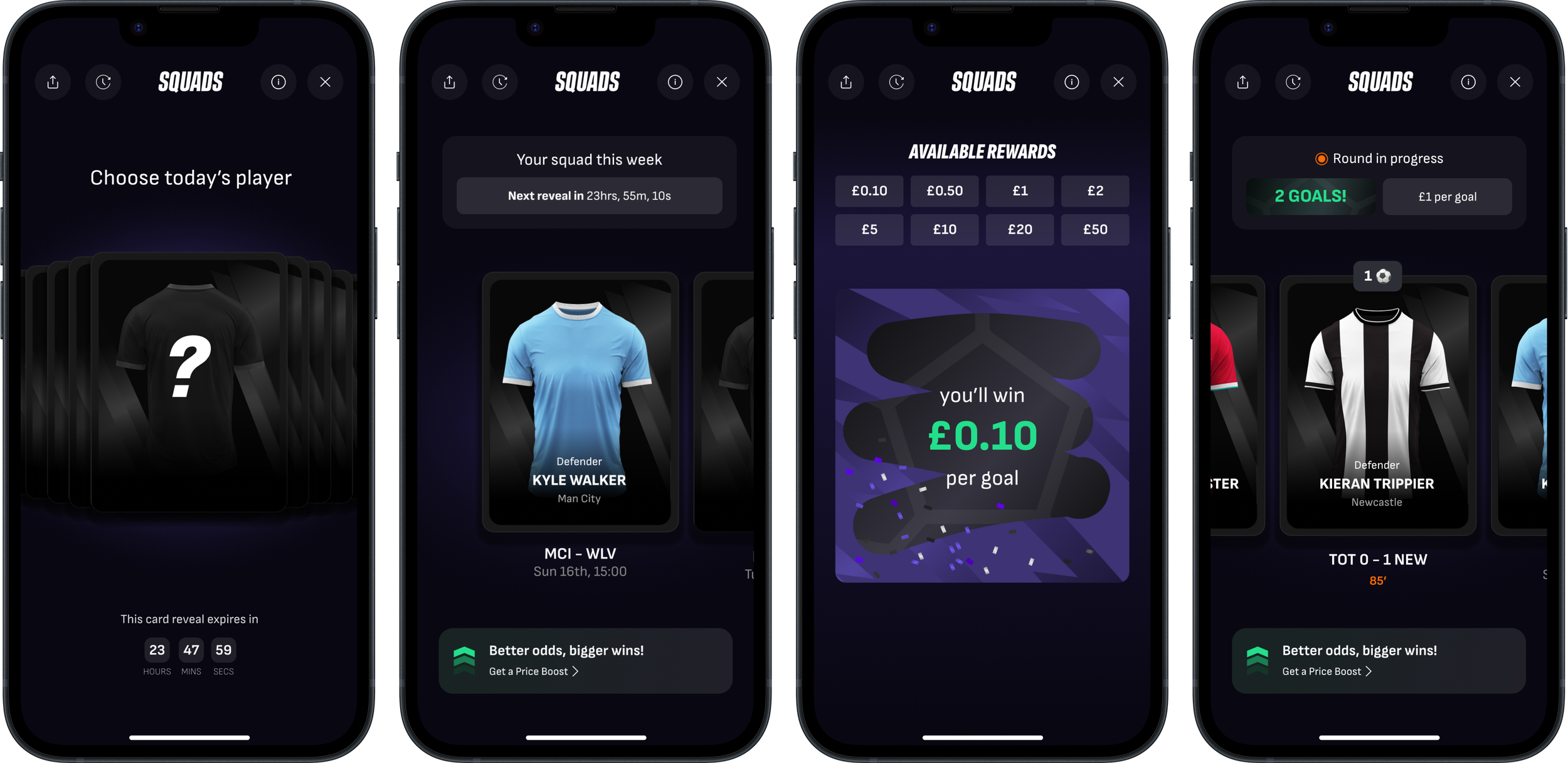
The user reveals 1 football player card every day, Monday to Friday. With the last player reveal, the user’s squad gets assigned a prize per goal. When any player on their squad scores a goal in a weekend match, the user gets paid withdrawable money.
2. A Vague brief
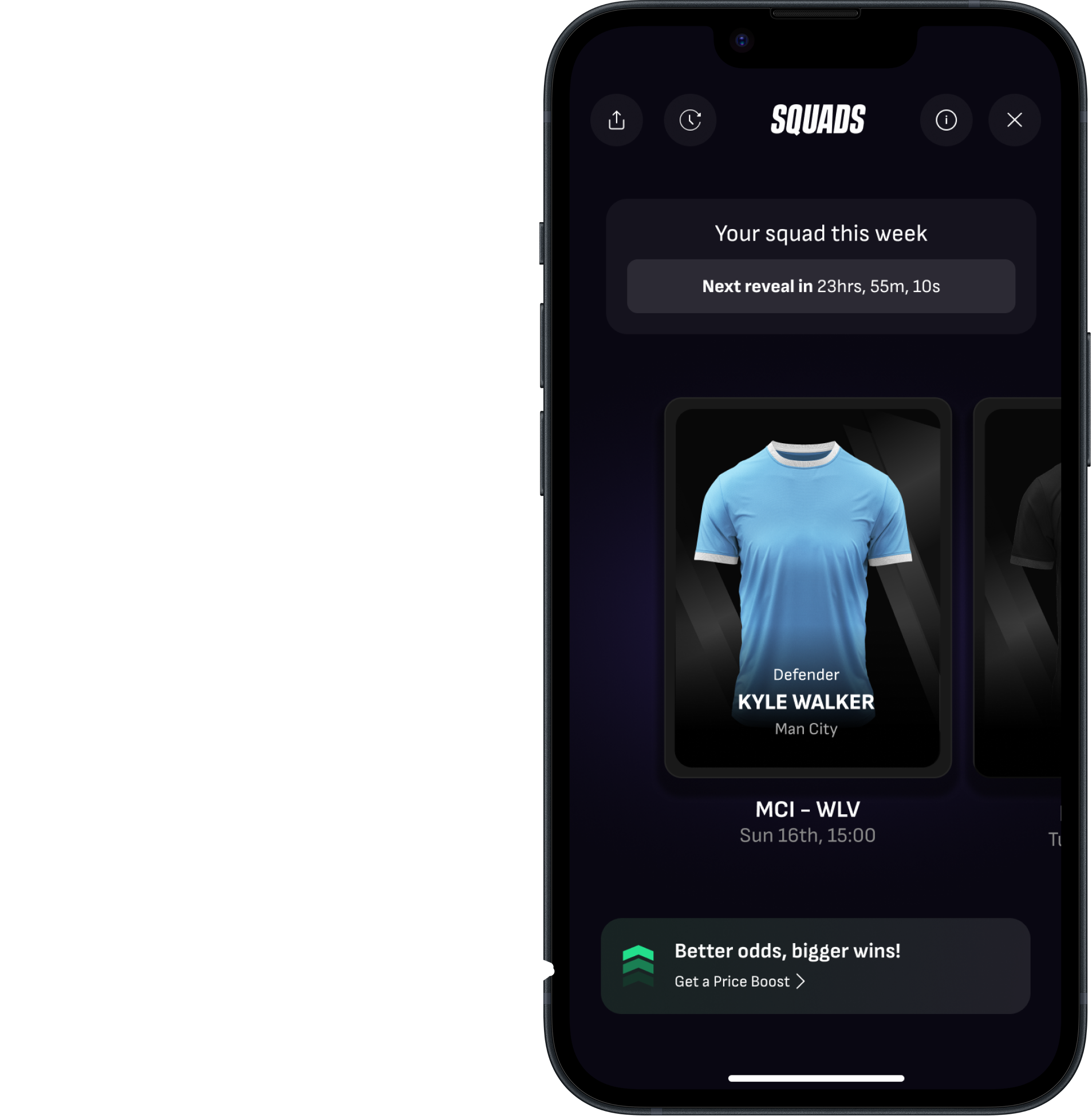
The brief was vague, the main concern was the upsell banner on the current experience not performing. The function of this banner is to upsell users that play SQUADS into placing sports bets on the same platform.
I was asked to explore ways to upsell users. There were mixed concepts and suggestions such as looking at retention, daily engagement and acquisition. My first task was to understand what problem we were actually trying to solve.
3. Research: Understanding the Problem
The upsell banner
The banner has effectively had flat performance since deployment, with a weekly average of only 1,01% CTR. Out of those unique users, only a 4.52% placed a bet.
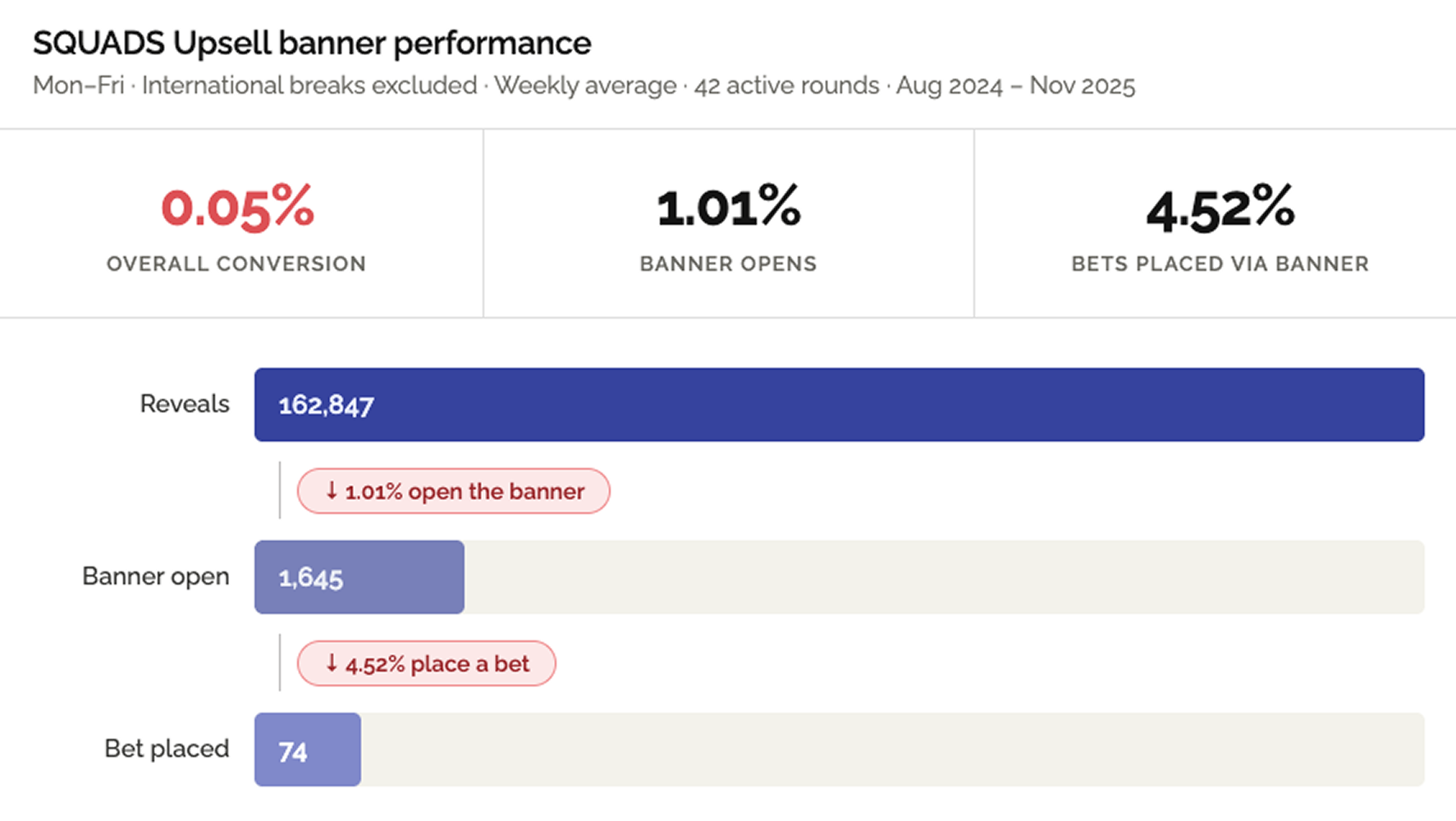
Note: Raw data is tracked daily. Figures shown are weekly averages for easier data visualisation. Averages taken across 42 active rounds (Aug 2024 – Nov 2025), excluding international breaks and closed weeks.
But what is the root problem that goes beyond a poor banner performance?
I had questions as to who are our Squads players what are their behaviours. I’ve continued digging into metrics and this is what I found:
Retention
Retention to the game was discarded as a problem. We retain over a 90% of unique users in the first month and over a 40% after 6 months, which are very healthy retention numbers within the industry.
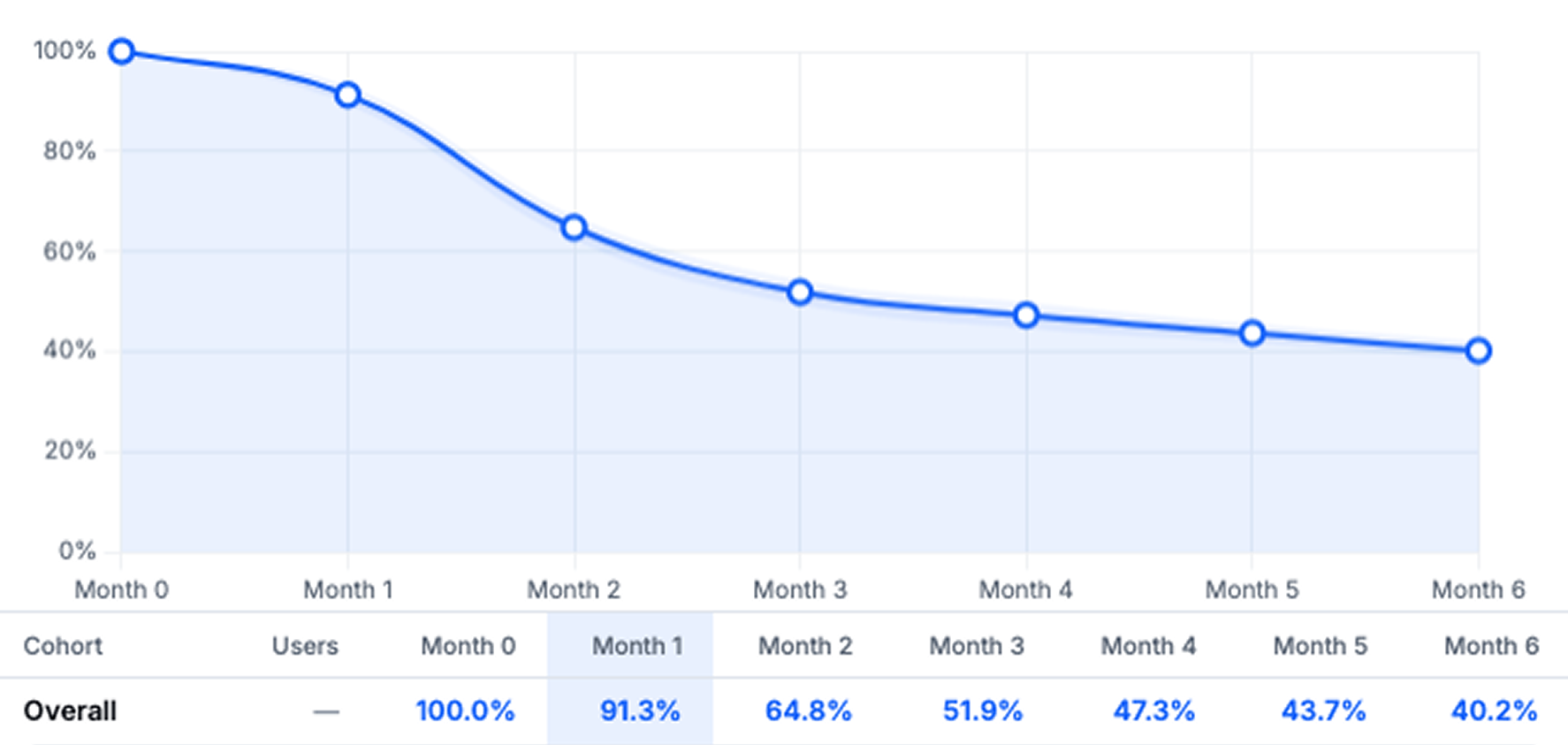
Captures unique users that entered SQUADS in August 2024 to Nov 2025, takes an average of the 14 cohorts. The percentages show what proportion of that original group came back in subsequent months. The Overall row is the average across all cohorts
Engagement
SQUADS users already have the habit of coming to the product every weekday, with an average of 4 out of 5 reveals a week.
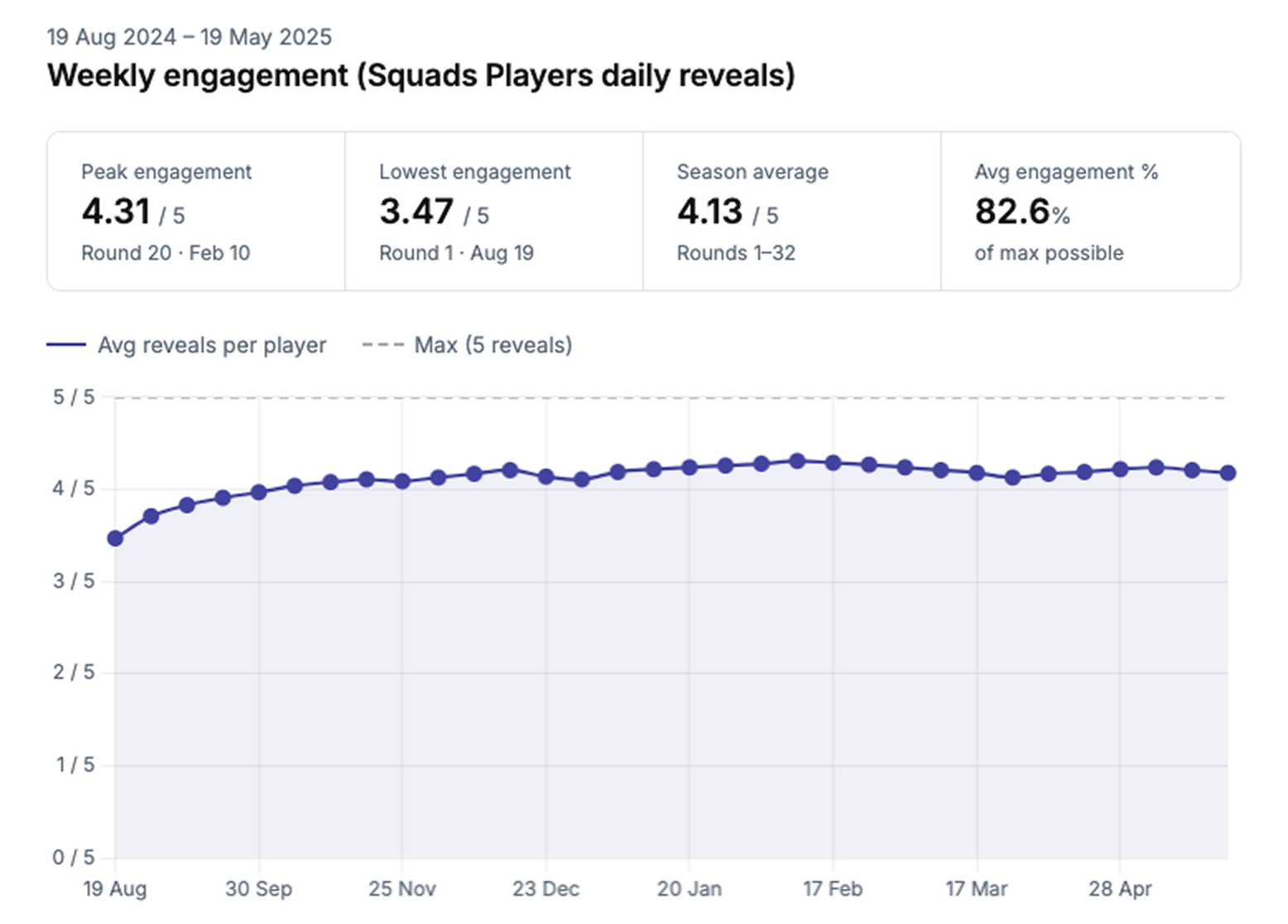
Note: We calculate engagement as daily reveals. Whilst doing my research, I converted it to weekly average figures to understand what was the engagement in simple terms. Above graphic is a representation of it.
Squads audience
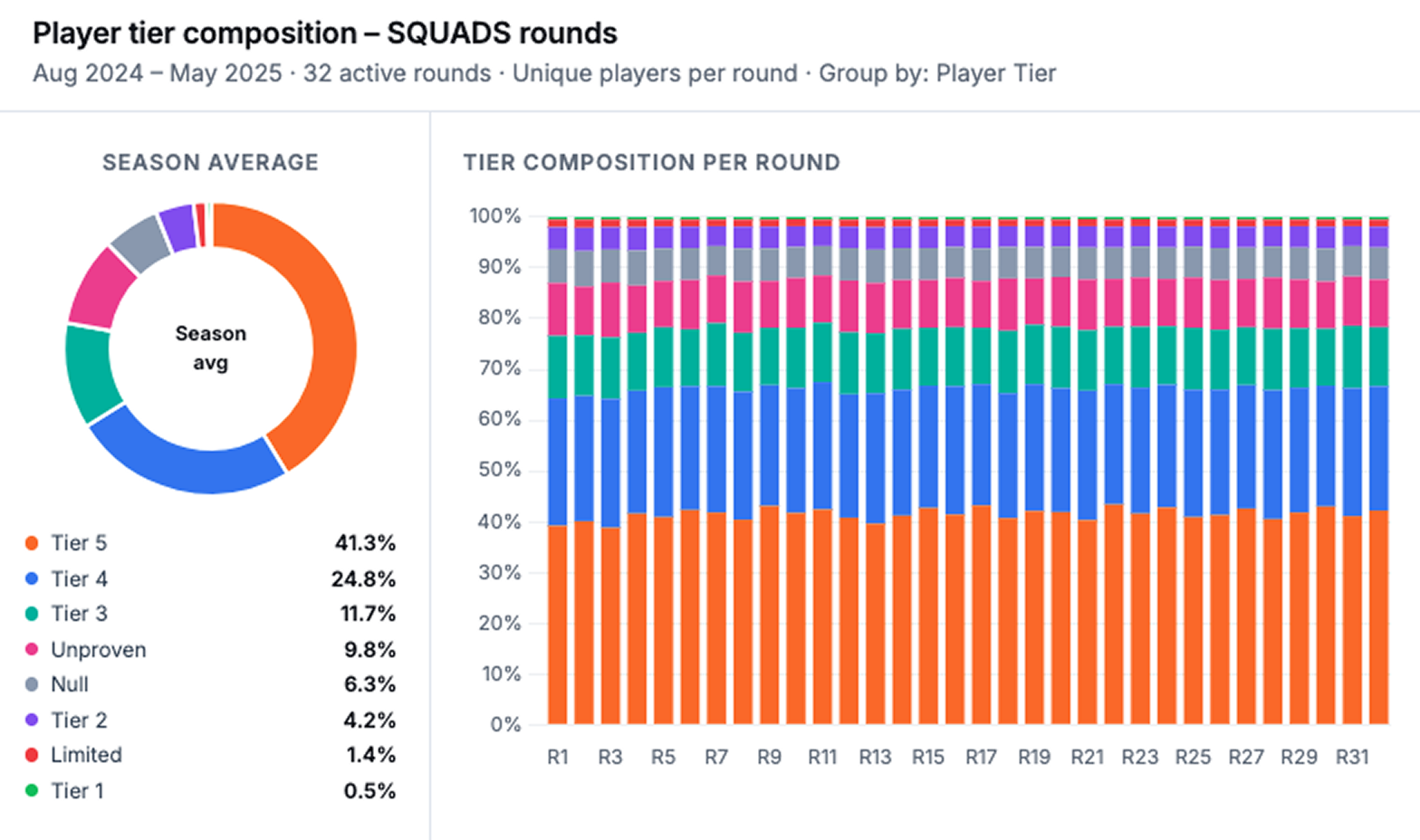
Tier 5 users (low-spend users) make up the biggest cohort of SQUADS players
Connecting insights and validating hypothesis
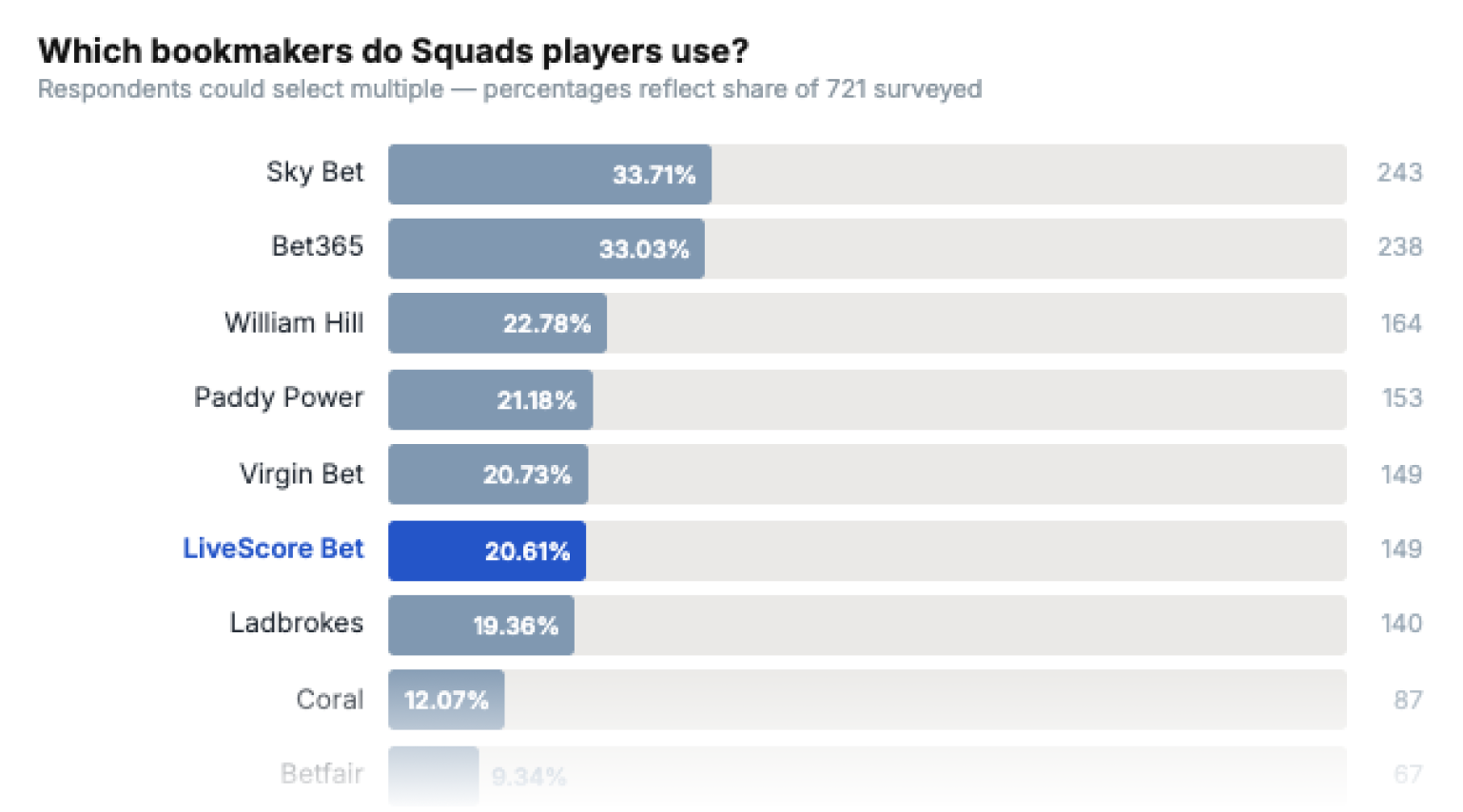
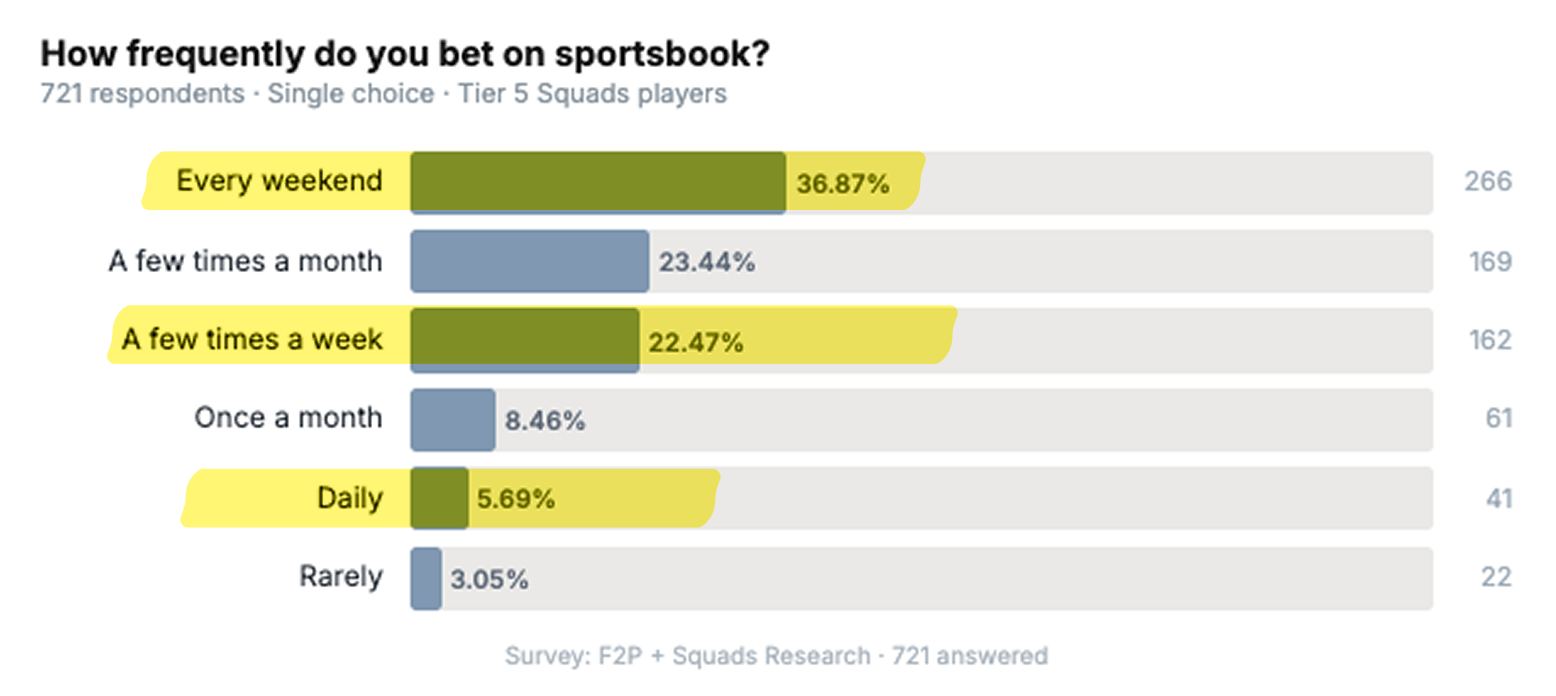
Previous research showed that 80% of our LiveScore Bet audience bets with more than one betting provider. This raised a question specific to our Squads player base: are Tier 5 users genuinely low-spend bettors, or are they regular bettors whose spend is concentrated elsewhere?
We’ve run a survey to validate the hypothesis and these where the findings:
The critical insight
65% of Tier 5 bet weekly—
but with our competitors
This insight brought further questions to the research
Why do SQUADS daily players choose our competitors to bet?
Previous user research have surfaced some factors are structural: low industry loyalty, competitors with bigger bonus budgets, better odds, as well as user habit. Some of these factors are outside our control.
What we could act on were the frustrations users had with the game itself.
SQUADS users frustations
➡️ No control over their players
Users want some level of strategy and knowledge application, although this needs to be balanced with low effort.
➡️ Dissatisfaction with prizes
Which matches the metrics we’ve seen for these user cohorts. Most Tier 5 users, earn between £0.10 and £0.50 per goal.

Research conclusion
Together, the quantitative and qualitative data pointed to the same gap: an engaged but undermonetised audience, with an existing weekly betting habit that wasn't directed at us.
4. The Opportunity
Connect Tier 5 users' unmet needs —perceived control over their squad and more meaningful rewards —to their existing betting habit, redirecting part of that weekly activity to LivescoreBet and unlocking higher wallet share from an already engaged but undermonetised audience.
Main success metric identified
Bet placement % uplift from Tier 5 Squads players
5. Ideation
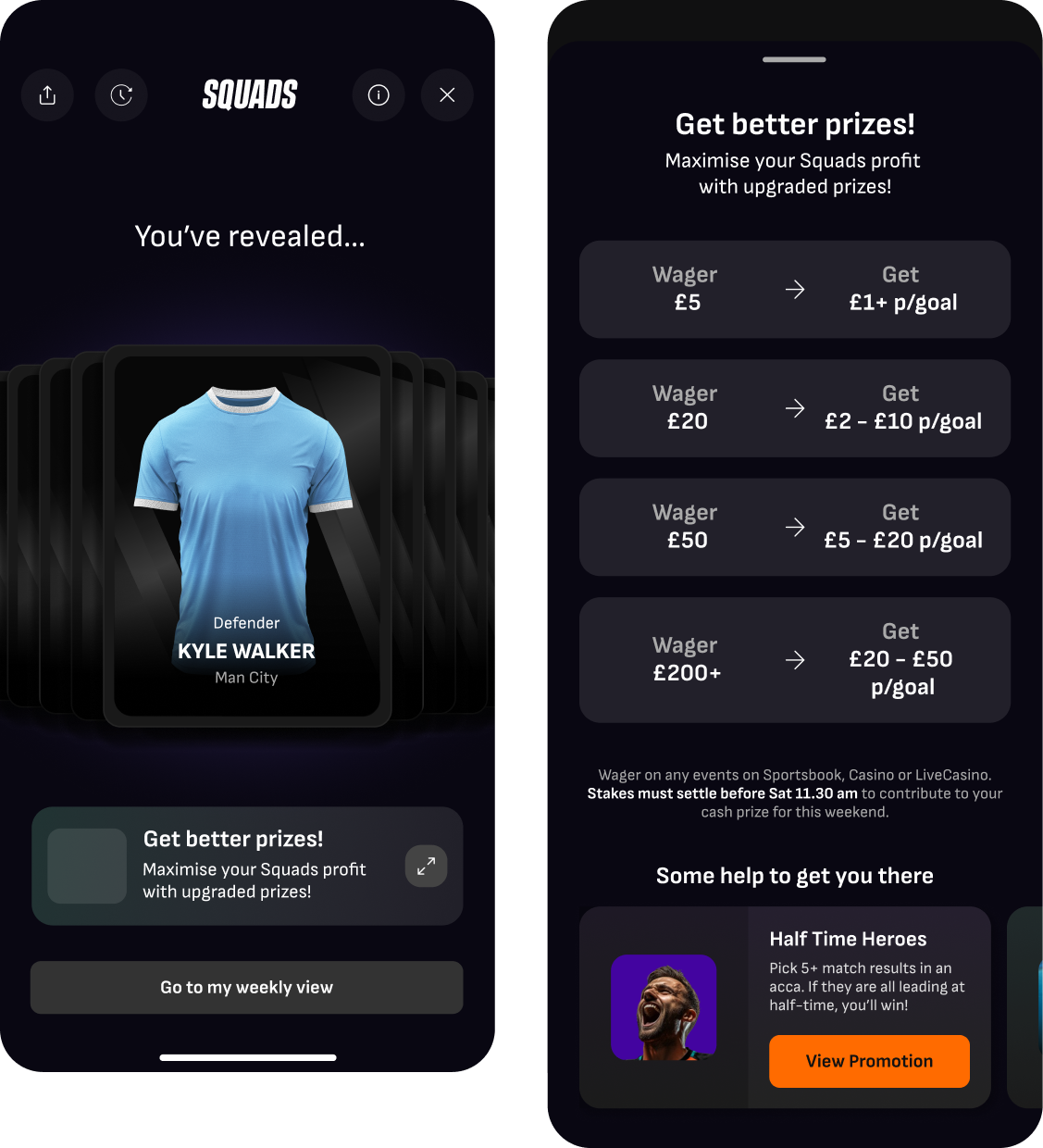
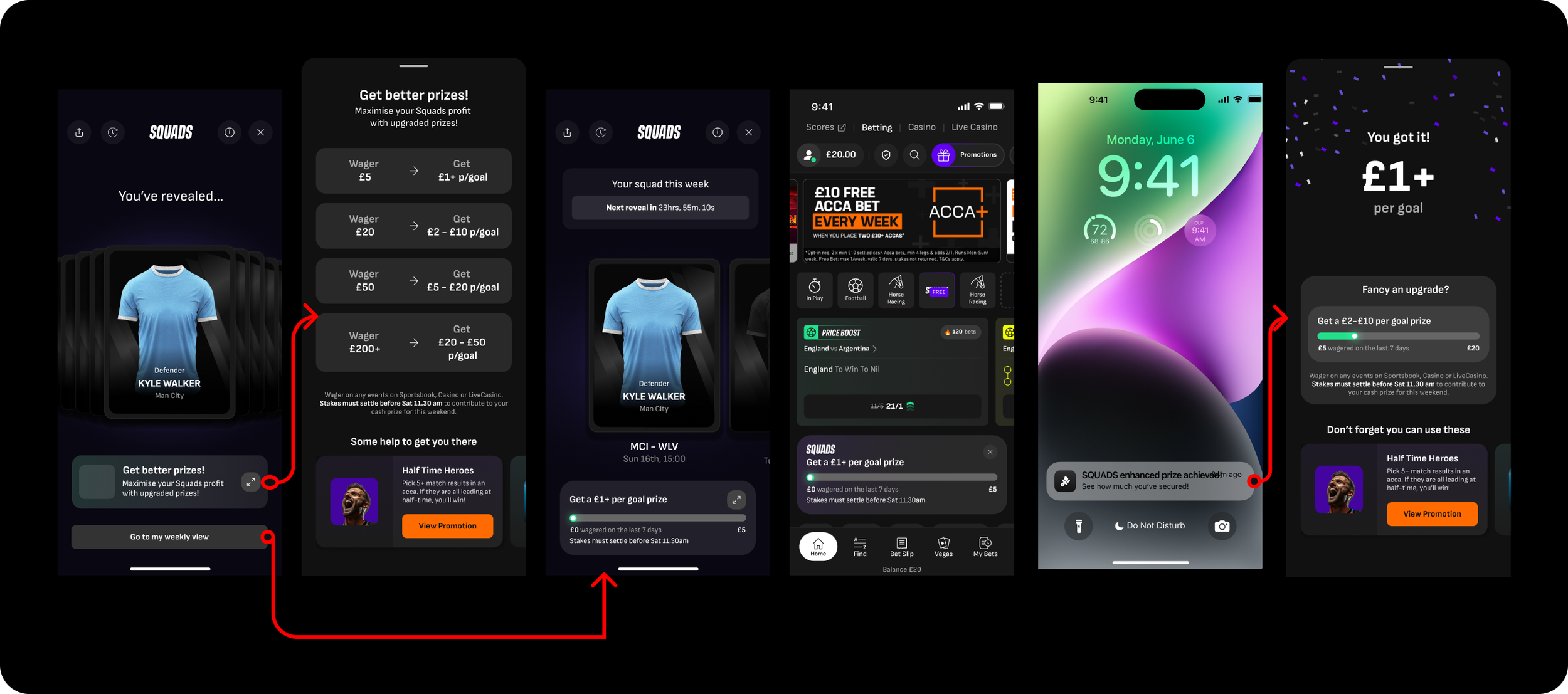
Option 2: Wager to get a better cash per goal
-
Make the existing prize allocation model visible and selectively enhance it for engaged users. By packaging the prize allocation model into levels and gamifying the experience: the more you bet that week within our product, the higher your prize per goal on Squads.
-
Tackles user pain point on prize allocation
✅ Connects bet requirements with user game engagement
✅ Fast implementation — Just a few overriding rules to the model logic to enable these upsells, no dependency on other dev teams
✅ Potential to evolve into a tool for bonus optimisation, redistributing prize allocation away from 27% bonus abusers
-
After modelling the numbers with the Insights team, offering a marketable prize range required lowering profit margins to a level that risked losses or otherwise required a review of bonus allocation from our promotions across the wider product.
Conceptual design, happy journey
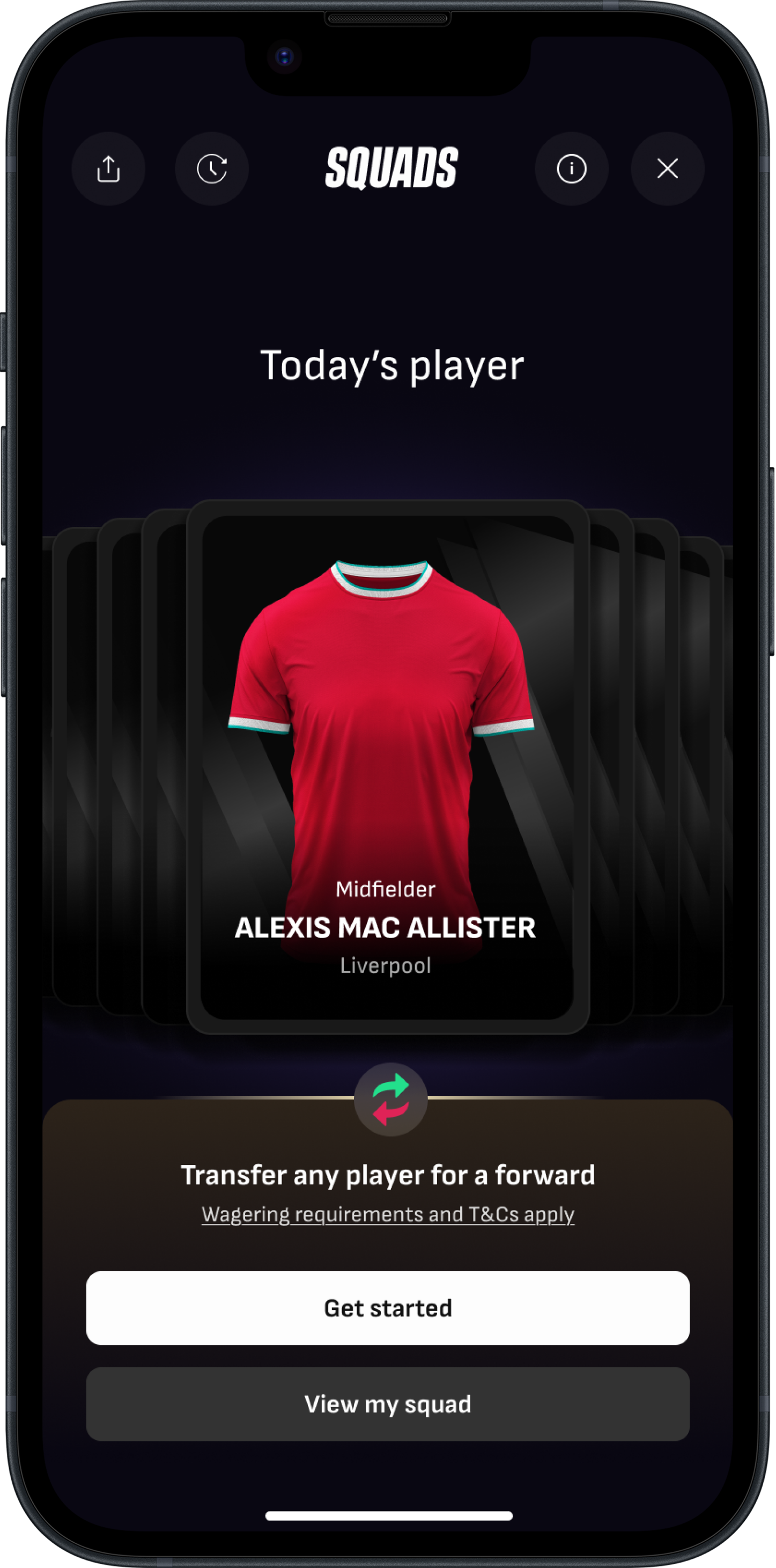
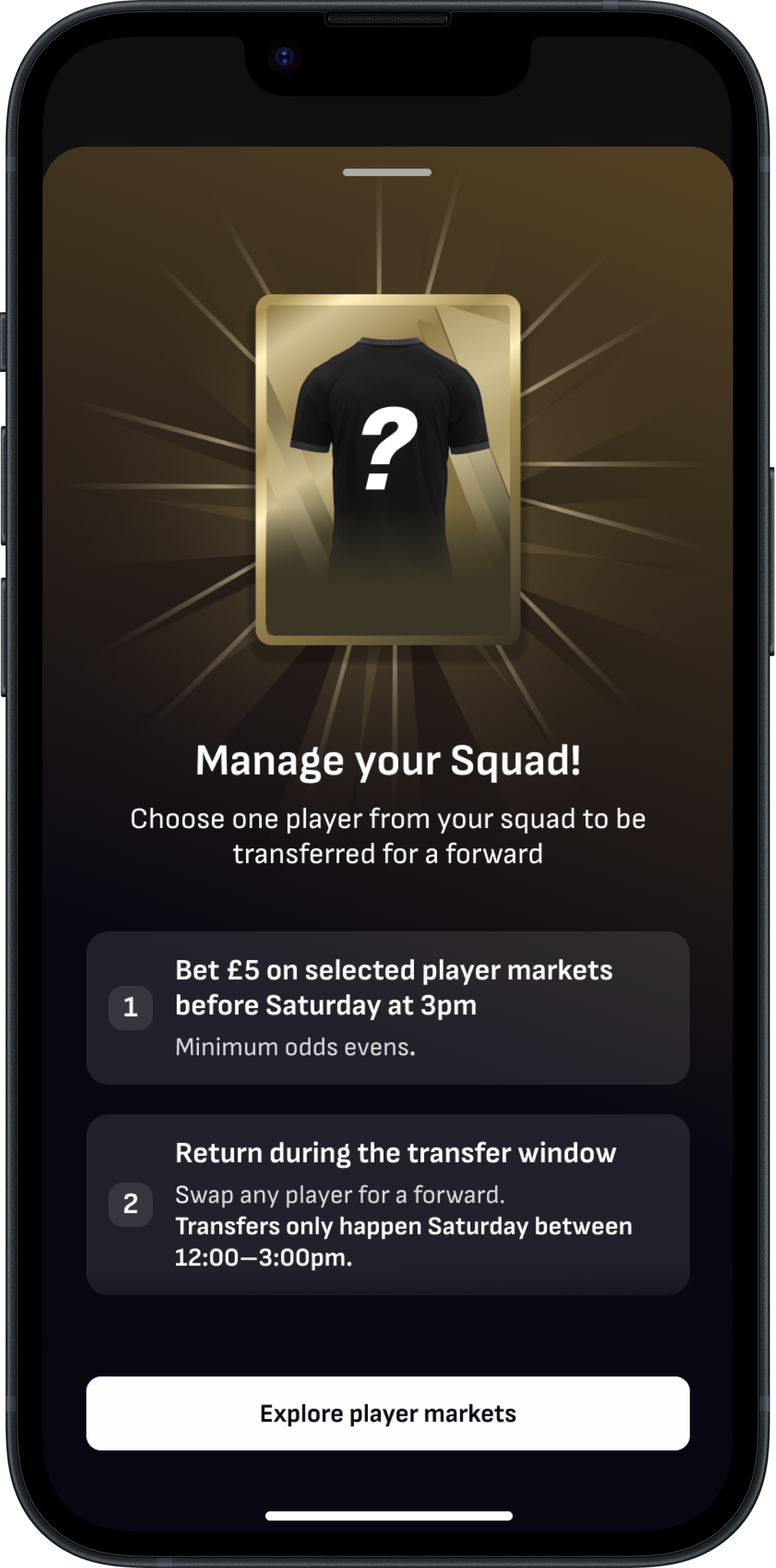
Option 3: Wager to swap any player for a guaranteed forward← Selected
-
Users who place a qualifying bet unlock a transfer window to swap any player for a guaranteed forward.
-
Addresses the lack of control over players users receive, allowing a level of knowledge application by choosing which player from their squad they want to transfer out.
Embeds the upsell strategy trhough a gamified approach, connecting the user engagement with the game to the business need for a higher wallet share from Squads players.
The transfer window element fits naturally with user behaviour, bringing traffic during prime time for both the business and the users’ weekly activity
-
Implementation may involve dependency on a second dev team
Option 1: Dynamic contextual banners
-
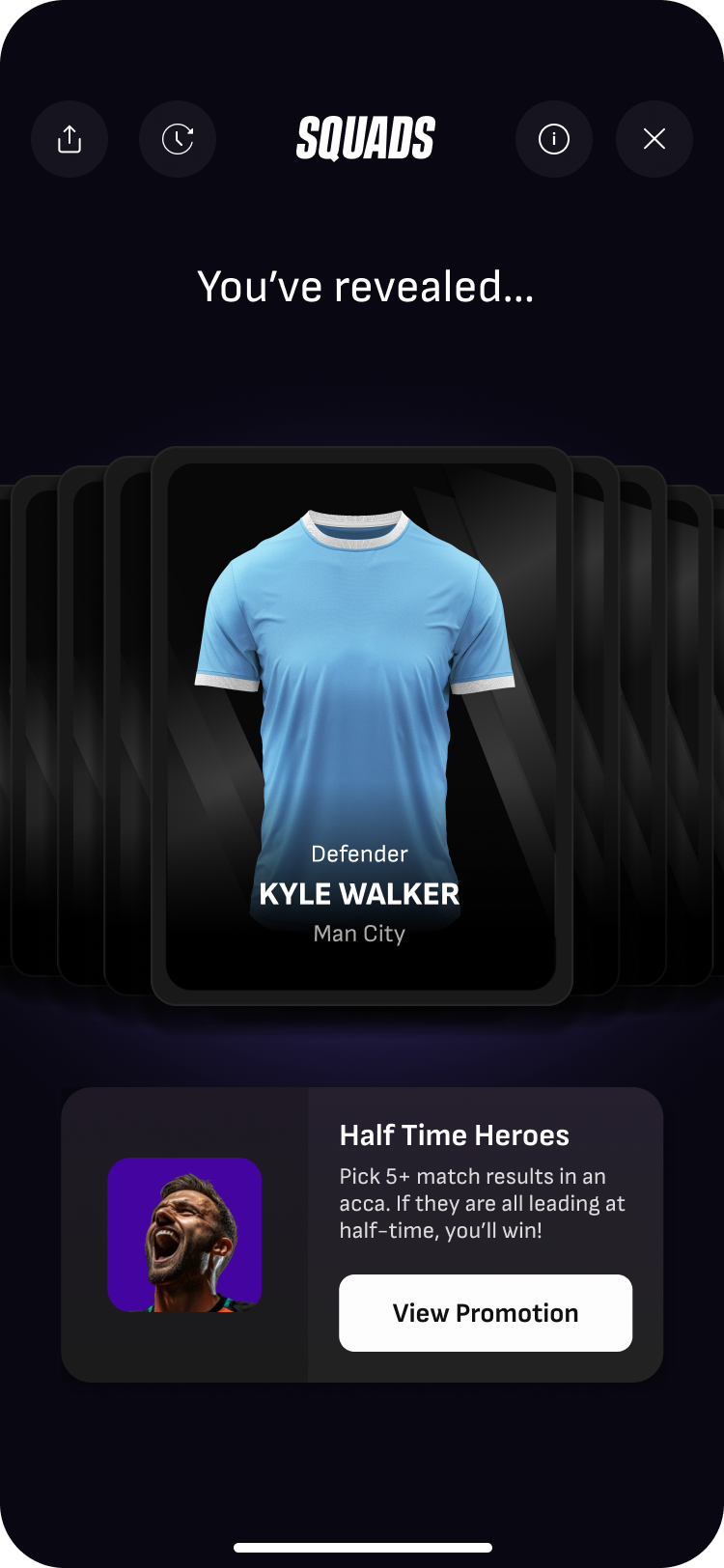
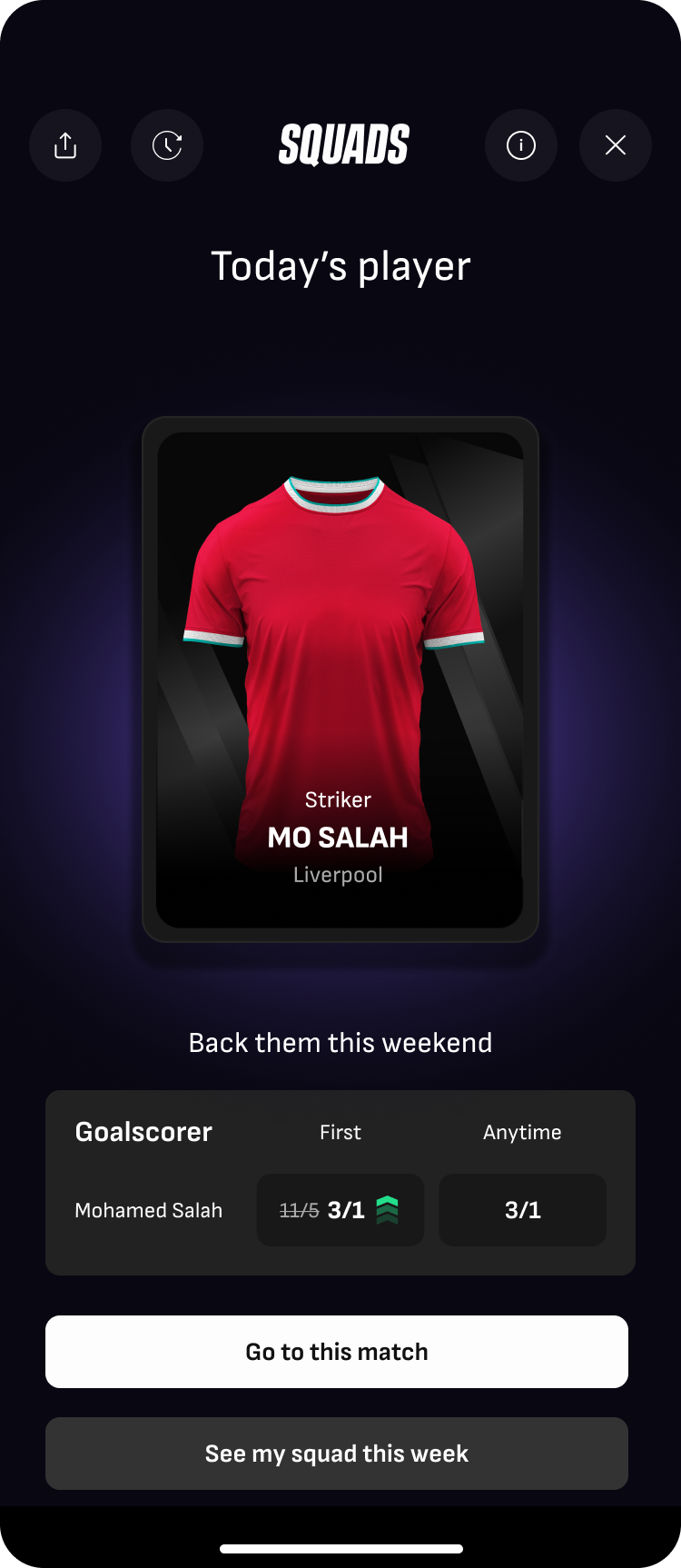
Repurpose promo banners and make them relevant to users’ player reveals, using logic to display the right promotion or betting market based on users’ betting behaviour and the Squads player revealed that day.
I presented this option strategically last, after stakeholders were already invested in Options 2 and 3 — achieving an agreement on more flexible implementation timelines. -
Fast implementation — presented as a pragmatic short-term option
User research and metrics on different promo campaigns showed better user uptake of promotions when relevant to user behaviour and timing.
-
This may have optimised banner performance but failed to address root user pain points
Does not fully leverage the opportunity identified
Desirability testing
Research objectives
Determine whether either Option 2 or 3 generate intent to “pay to play”.
Determine whether Option 2 or Option 3 generates greater desirability
6/12 users showed better desirability for Option 2 (enhanced prize p/goal)
Feedback: better return on investment, given typically one of more of your users would normally score.4/12 users showed better desirability for Option 3 (transfer to get a forward)
Feedback: Seen as inherently increasing the chances of scoring and being rewarded
Gamification element: Mechanic embeds well into the experience, making it feel less transactional compared to Option 2.
Method: Unmoderated user tests
Screener: Tier 5 Squads players
Sample: 15 users, 12 valid tests
Hypothesis: I structured this as six falsifiable hypotheses across value trade-offs, effort-value perception, clarity, and conversion intent
Outcomes
No statistically significant preference between mechanics
Both were positively received, each for different reasons
6/12 users showed better desirability for Option 2 (enhanced prize p/goal)
Feedback: better return on investment, given typically one of more of your users would normally score.4/12 users showed better desirability for Option 3 (transfer to get a forward)
Feedback: Seen as inherently increasing the chances of scoring and being rewarded
Gamification element: Mechanic embeds well into the experience, making it feel less transactional compared to Option 2.
Low disengagement risk
0/12 users expressed they would stop playing Squads if this freemium mechanic was introduced, provided baseline free experience remains the same
2/12 users expressed they would continue playing the free version disregarding the upsell mechanic.
Conclusion
Whilst there’s no clear winner between the options tested, there is a good takeaway on 10/12 user showing intent of engaging with an upsell mechanic that enhances their experience.
Assessing options
At this stage, we went into a Direction agreement meeting to present the intiative and pitch different solutions to business stakeholders. Before that, I involved the below teams to assess the different solutions proposed:
Partnered with Dev team during early ideation to assess high-level feasibility of potential solutions, flag dependencies and tech constraints
Partnered with PM, Insights team and Promotions (bonus strategy team) to discuss business potential profits out of the different suggested solutions.
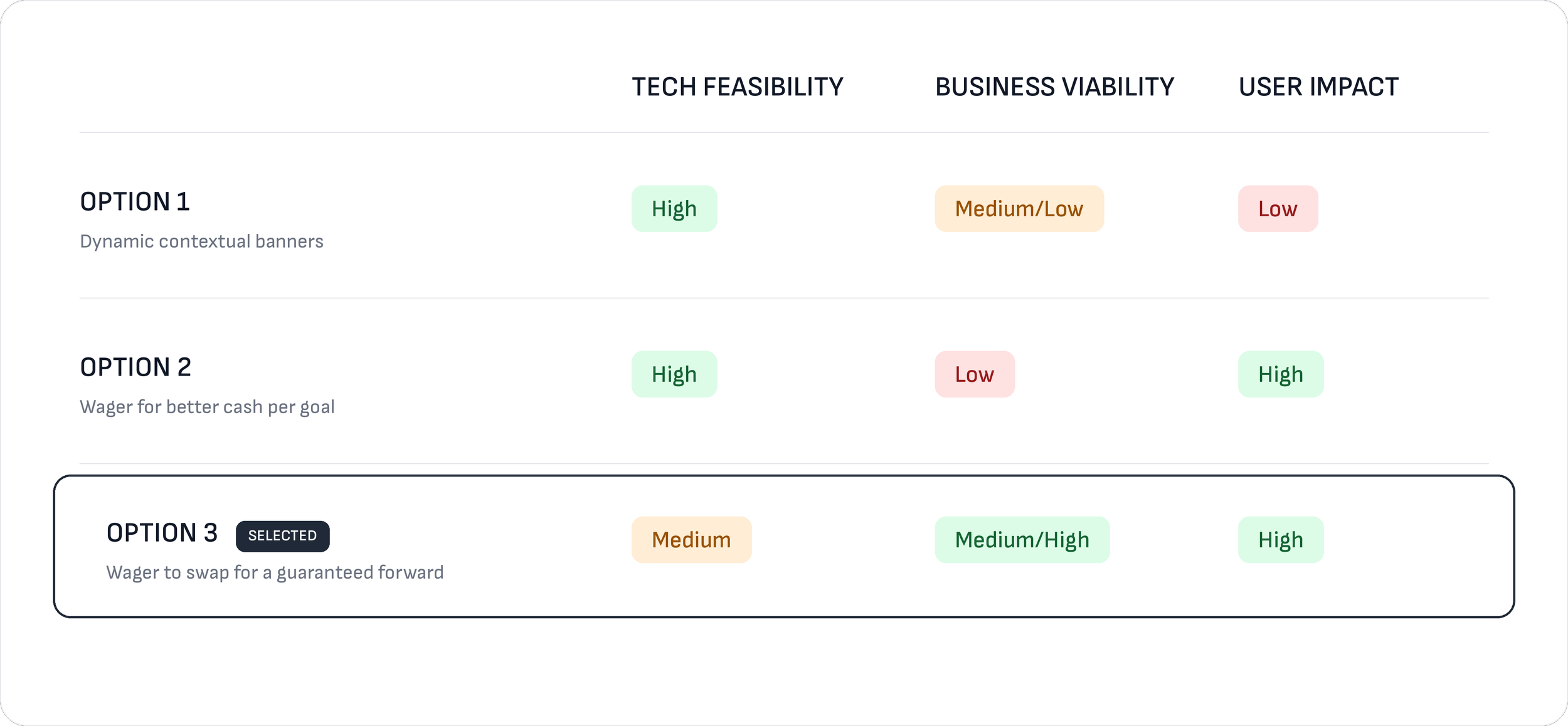
User impact was tagged as 'high' based on the user interviews from discovery phase + desirability testing on ideation — both Option 2 and 3 were well received, with low disengagement risk offsetting the lack of a statistically decisive preference between them.
6.The solution
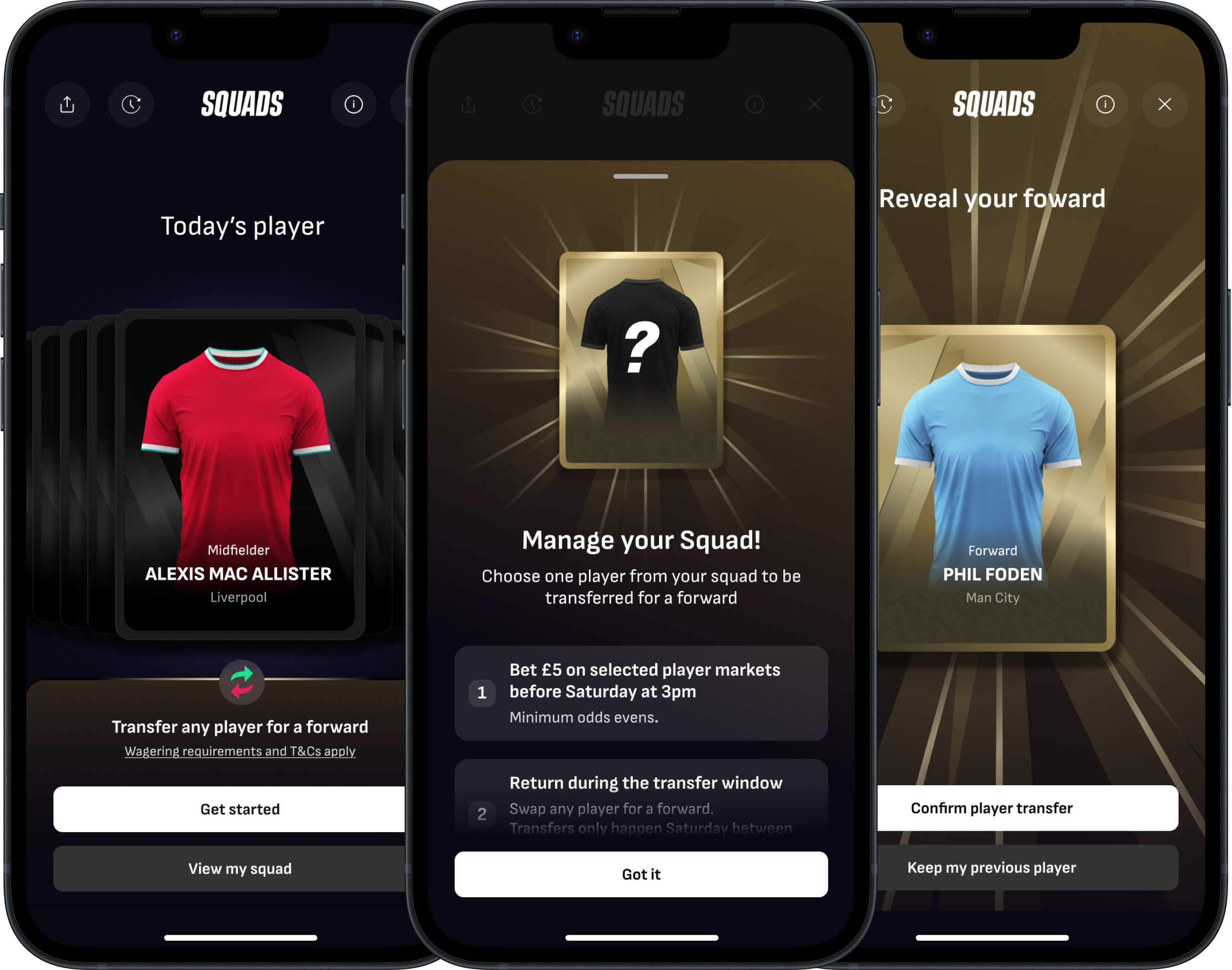
Wager to swap any player for a guaranteed forward
The mechanic
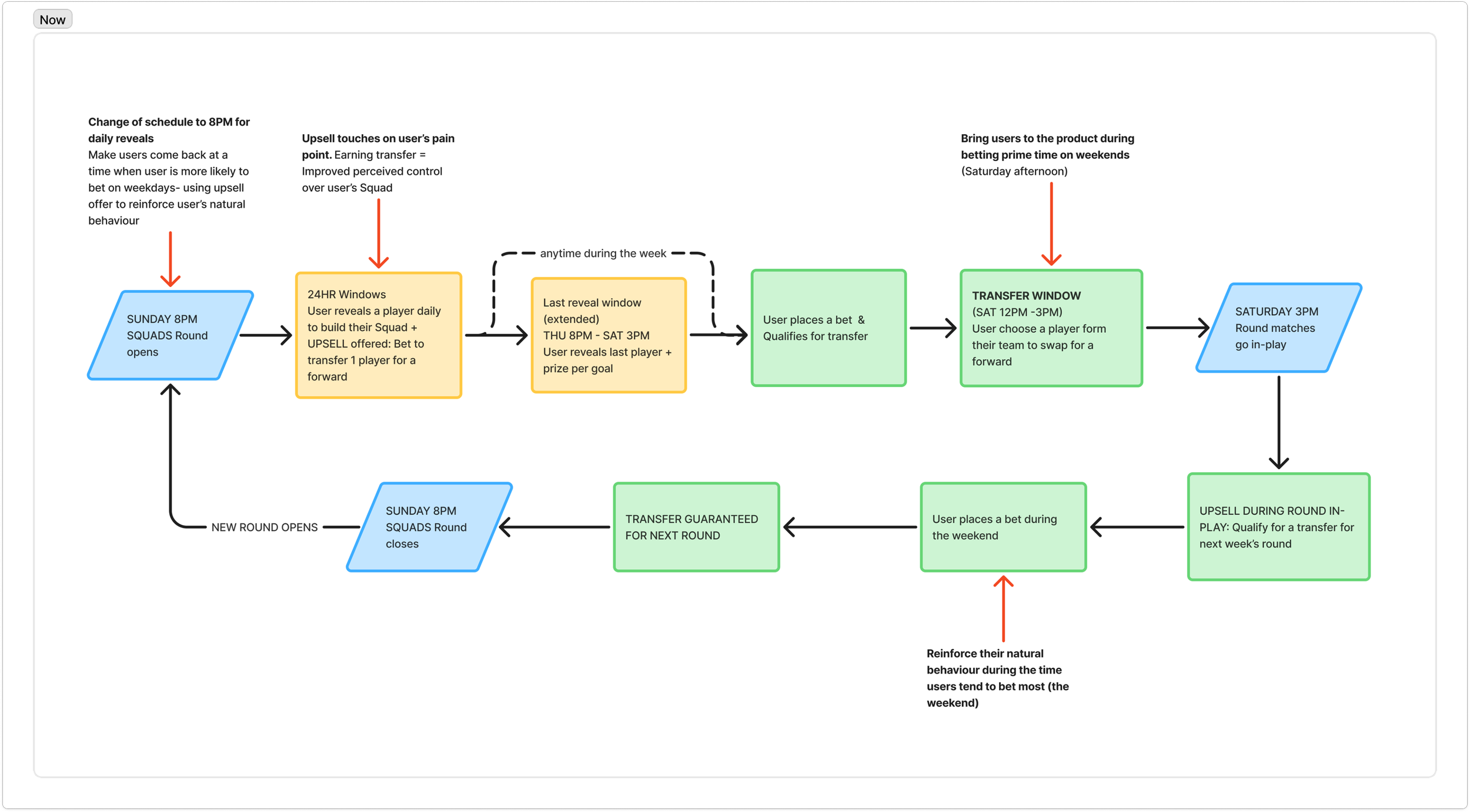
1️⃣ Users place a bet on any player market between Sunday 8PM (Round opens) and Saturday 3pm (Round goes in-play)
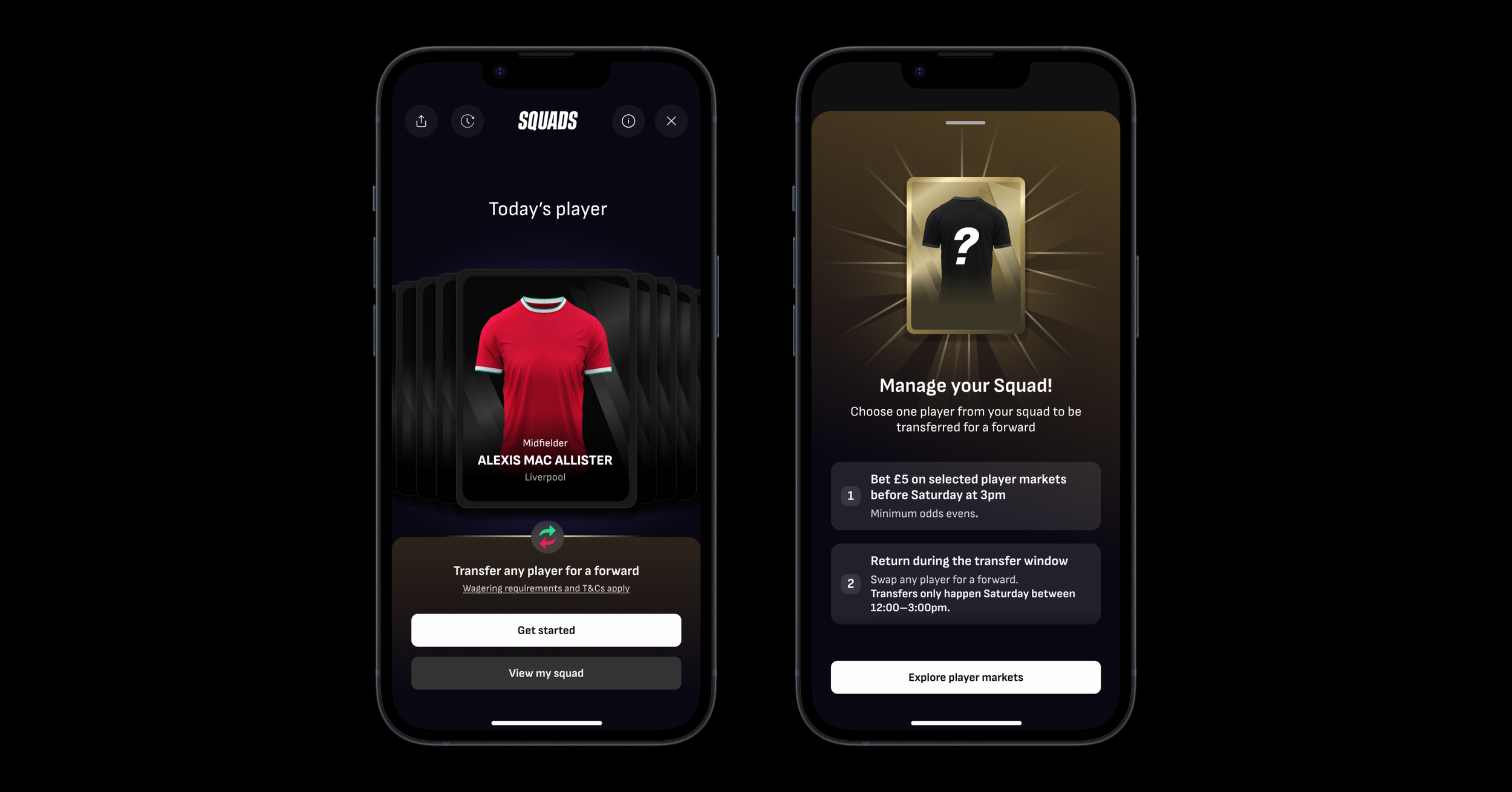
2️⃣ This unlocks a transfer window on Saturday 12pm–3pm, highest user traffic timeframe
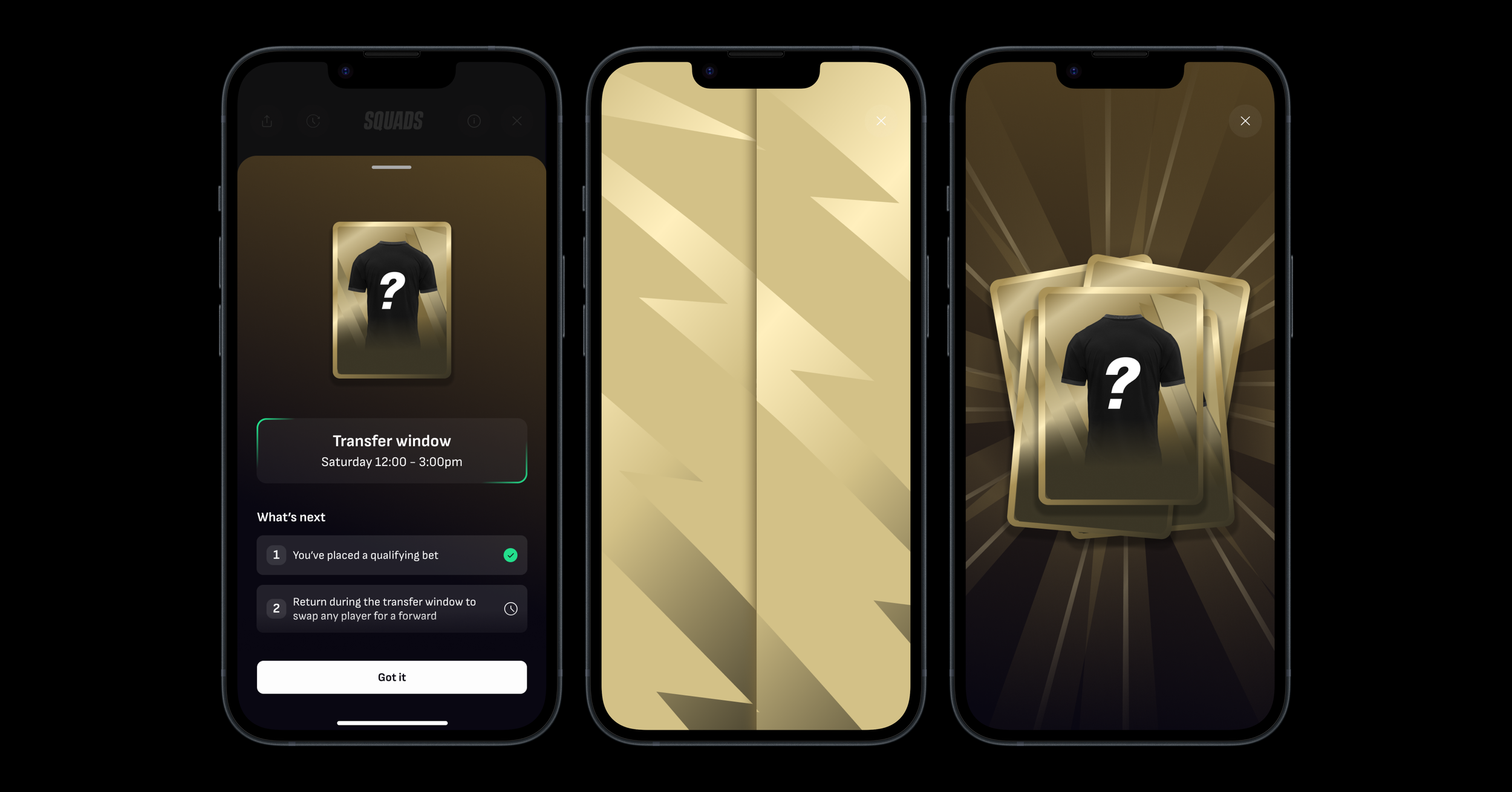
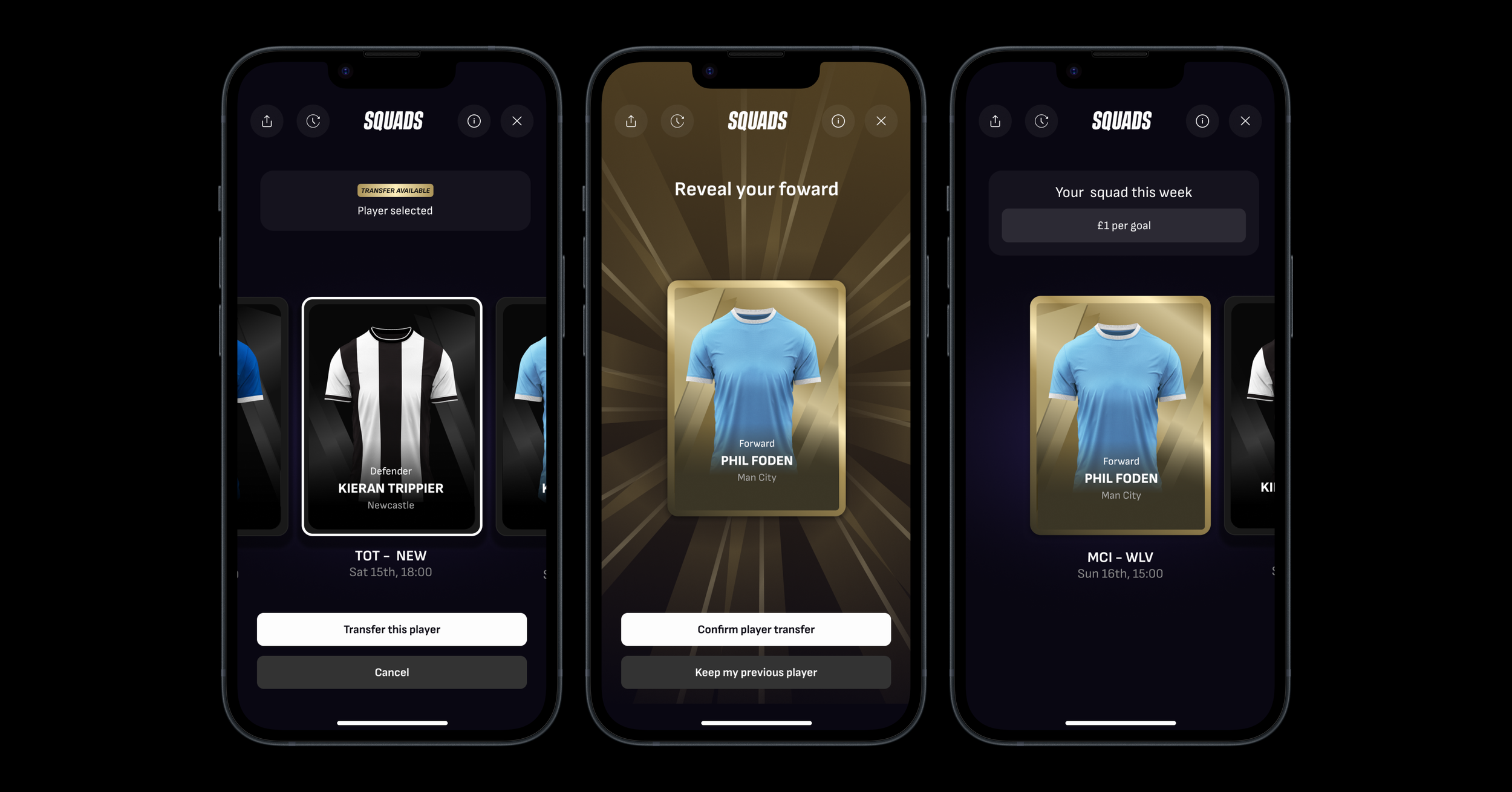
3️⃣ During that window, users swap any player from their squad for a guaranteed forward
Why every design decision was deliberate:
Perceived control— Users choose which player to transfer out, introducing a level of strategy and knowledge application within the game, as expressed by users during research.
Reward value — A guaranteed forward gives users a statistically higher chance of earning prize money, since forwards score more goals than defenders or midfielders.
The transfer window timing was the most considered decision. Our data showed Saturday afternoon is peak sports betting time — users already had the habit of betting then, just with competitors. Rather than creating a new behaviour, we redirected an existing one. Users coming to complete their transfer were on our platform at the exact moment they would typically open a competitor platform.
The betting requirement connected the two habits identified in the opportunity statement — playing Squads daily and betting weekly — creating a direct relationship between them within our platform for the first time.
7 Breaking it down into an MVP
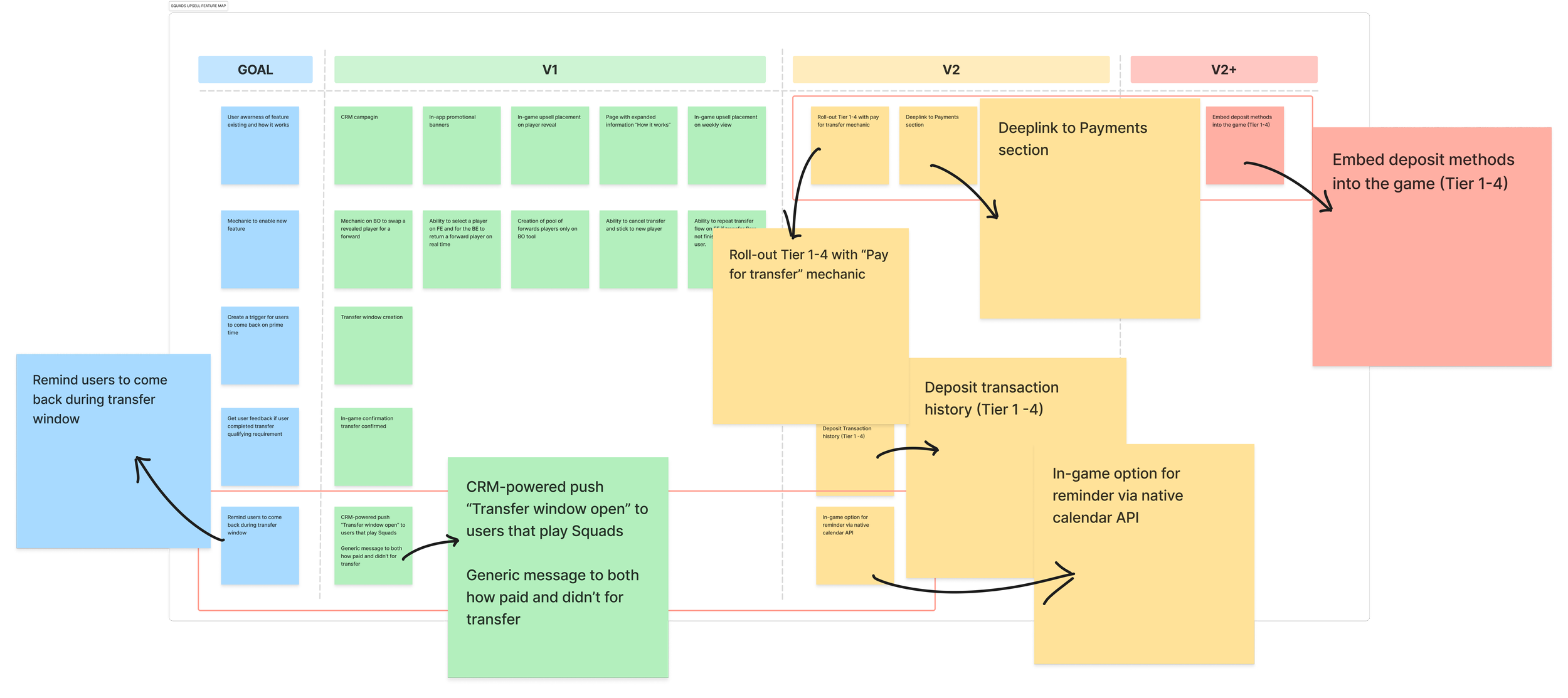
After aligning on going for the transfer experience, we worked with the PM on a feature map to align on what should be the minimum valuable experience. We’ve used this to flag at high level key dependencies and align on a scope for MVP.
8. Experimentation
Working with the Insights team, the teams proposed they proposed a two-phase test.
Tier 5 Controlled test
Test: Control group vs treatment group. We’re purposely not comparing against last season, to isolate the feature's effect from seasonality and fixture scheduling.
Test duration: 12 weeks.
User sample: Tier 5 active users, <£5 total wager in the trailing period. ~8,200 treatment / ~8,150 control (≈24% of the eligible Tier 5 base)
Success threshold: ≥5% weekly uptake, sustained across the full 12 weeks — benchmarked against LiveScore’s Bet conversion for “Pay-to-play” mechanics (2–12%), Below 2%, under every benchmark reviewed, was pre-agreed as a kill signal rather than something to iterate around.
Success metrics
Bet placement uplift
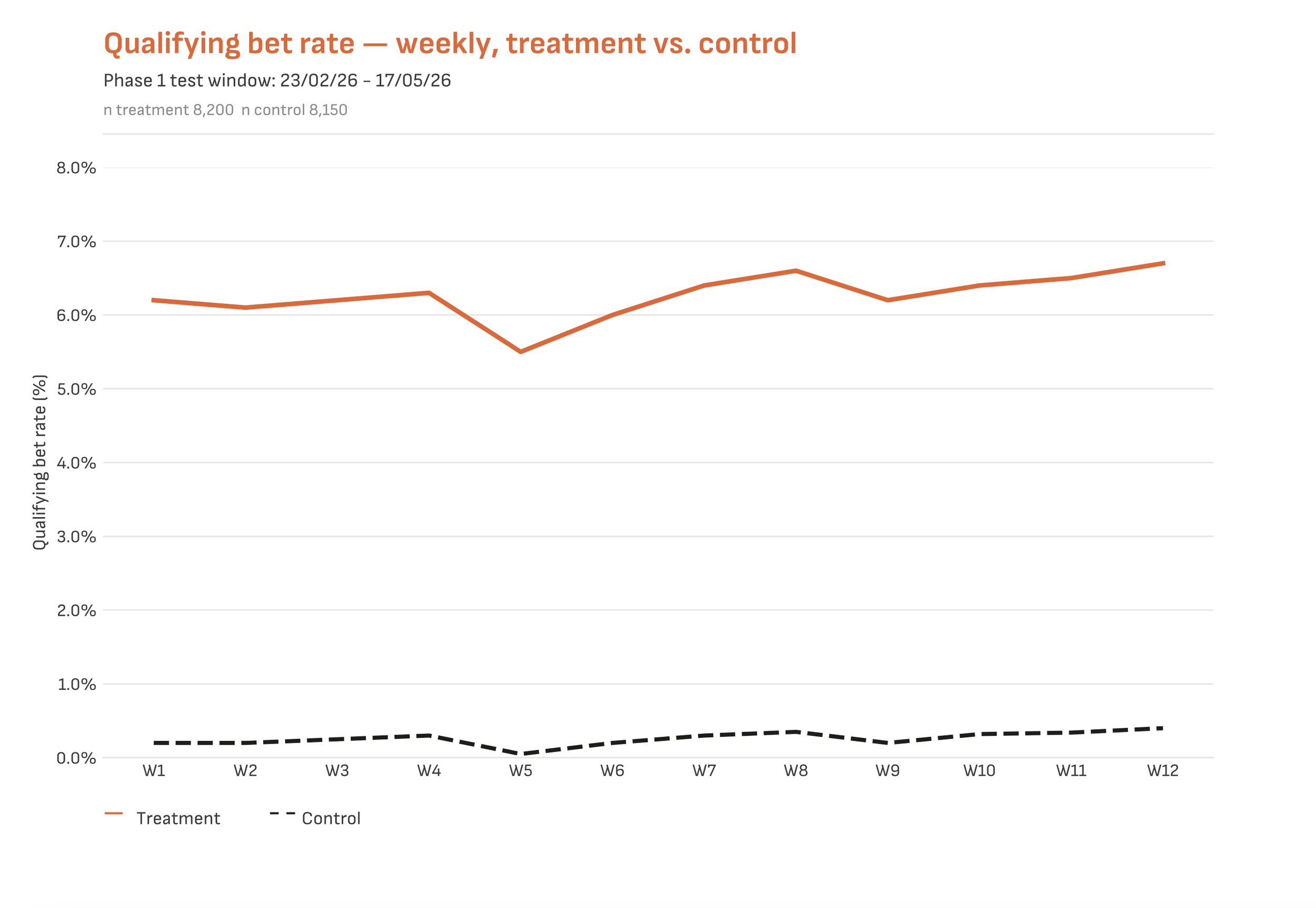
The qualifying bet rate (£5, any player market) among users who saw the mechanic (treatment), compared against a matched group who didn't (control), run in parallel over the same 12 weeks.
Hypothesis: the mechanic redirects betting behaviour that's already happening — just with competitors — toward LiveScore Bet.
Result: Treatment group averaged 6.3% weekly uptake against a 0.3% control baseline — a 6.0pp uplift,
comfortably above the 5% threshold. The gap held consistently across the 12 weeks, aside from a shared dip during the March international break (W5),
WoW retention
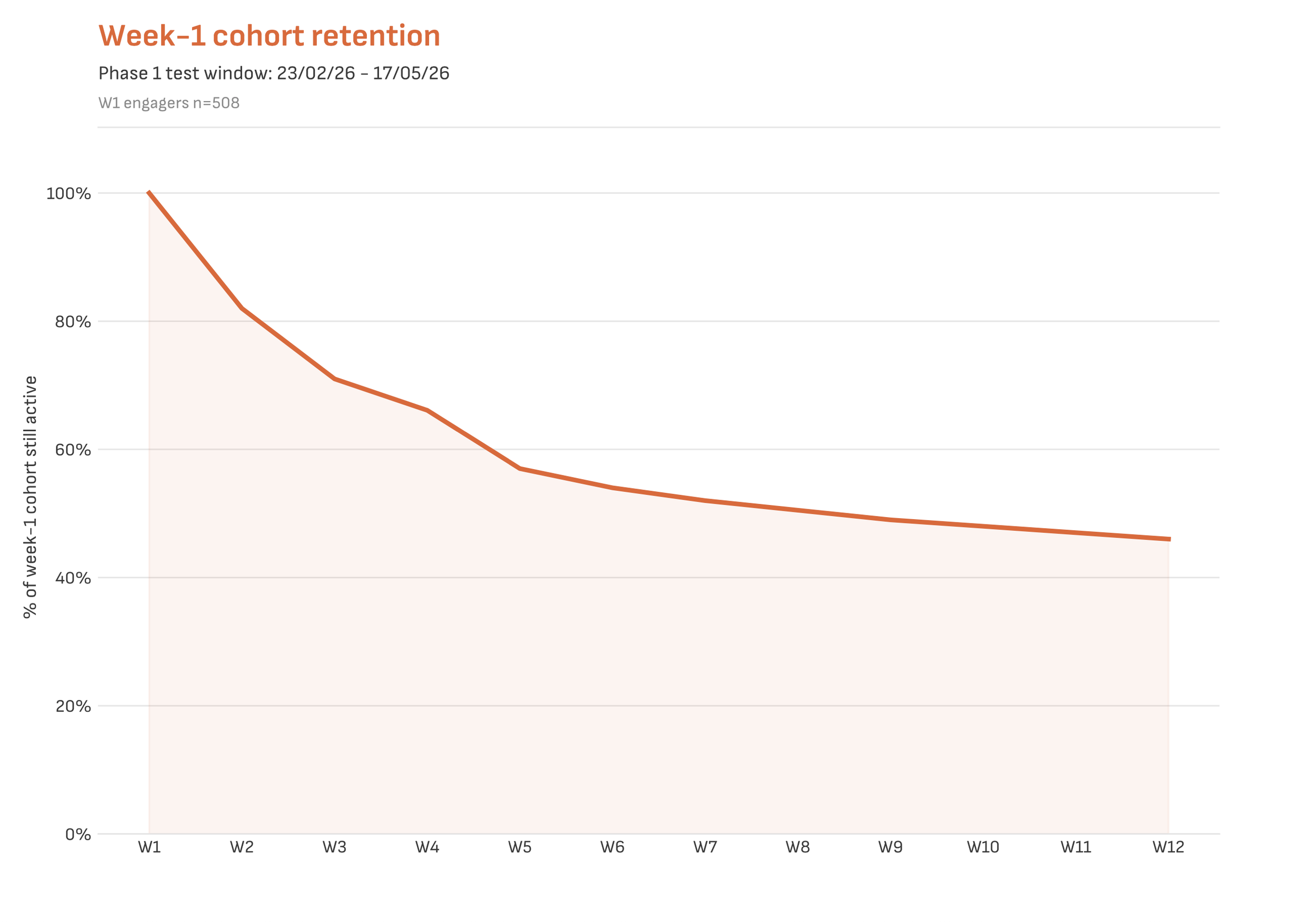
Week on week retention of the users who engaged with the transfer mechanic in week 1, the % who returned to it in each subsequent week through week 12.
Hypothesis: the mechanic becomes a weekly habit rather than a one-time incentive.
Result: 46% of week-1 engagers were still active at week 12, following a decay curve typical of new mechanics — a steep initial drop (100% → 66.1% by week 4), an additional step down during the international break (W5), and a gradual levelling off from week 8 onward.
Wager total, rolling 4-week (guardrail)
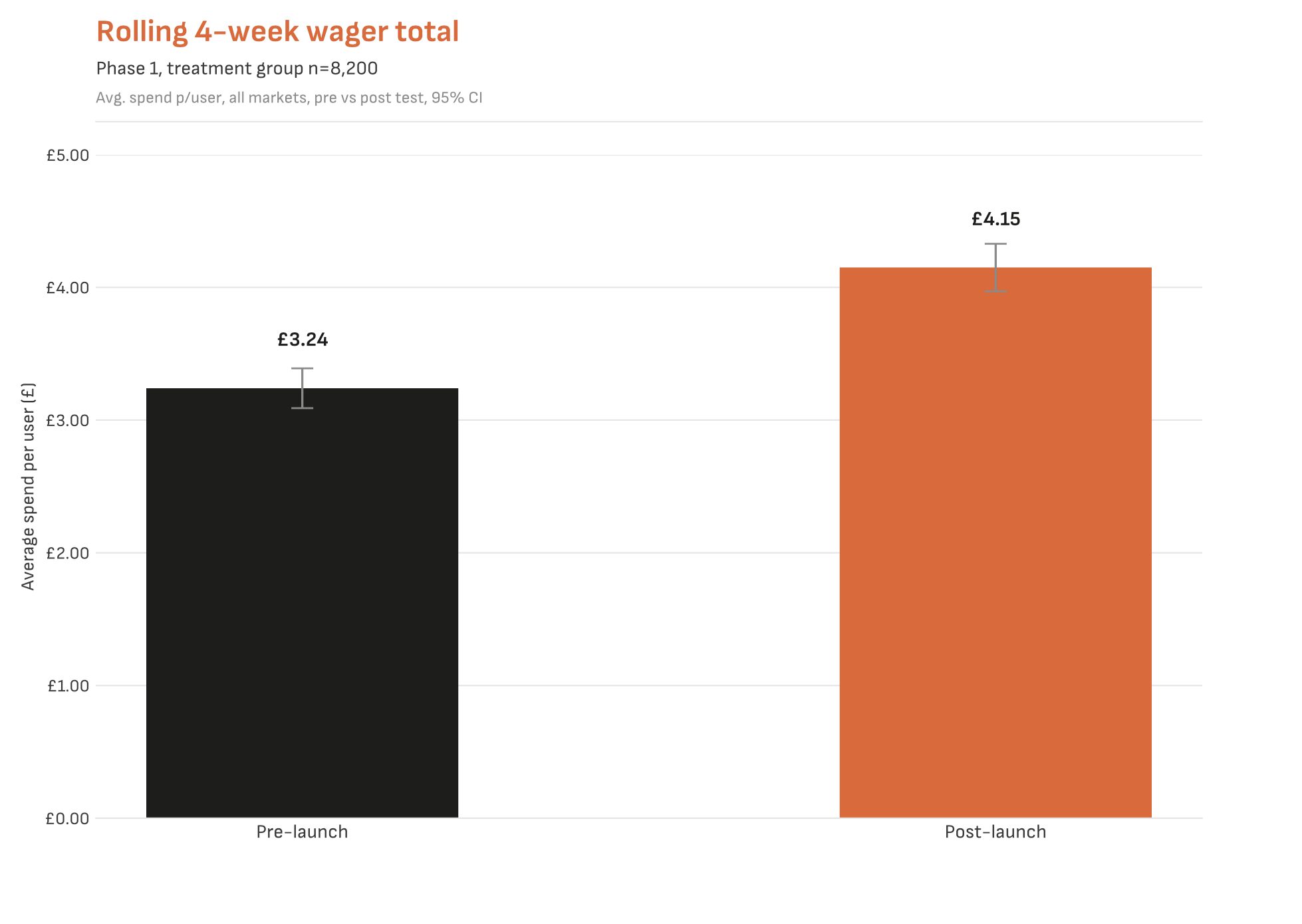
total spend across all betting markets per user, not just the qualifying bet, compared pre- vs. post-launch within the same users. Exists to catch a specific risk: a user moving their normal weekly spend into the qualifying bet, rather than adding new spend, would still show up as a North star uplift while generating no real incremental revenue.
Hypothesis: the uplift represents genuinely new spend, not a timing shift.
Result: average 4-week wager rose from £3.24 to £4.15 (+£0.91) — below the ~£1.20 a purely additive £5 qualifying bet would imply at this conversion rate, meaning roughly 75% of that spend was genuinely incremental rather than moved from elsewhere in the user's week.
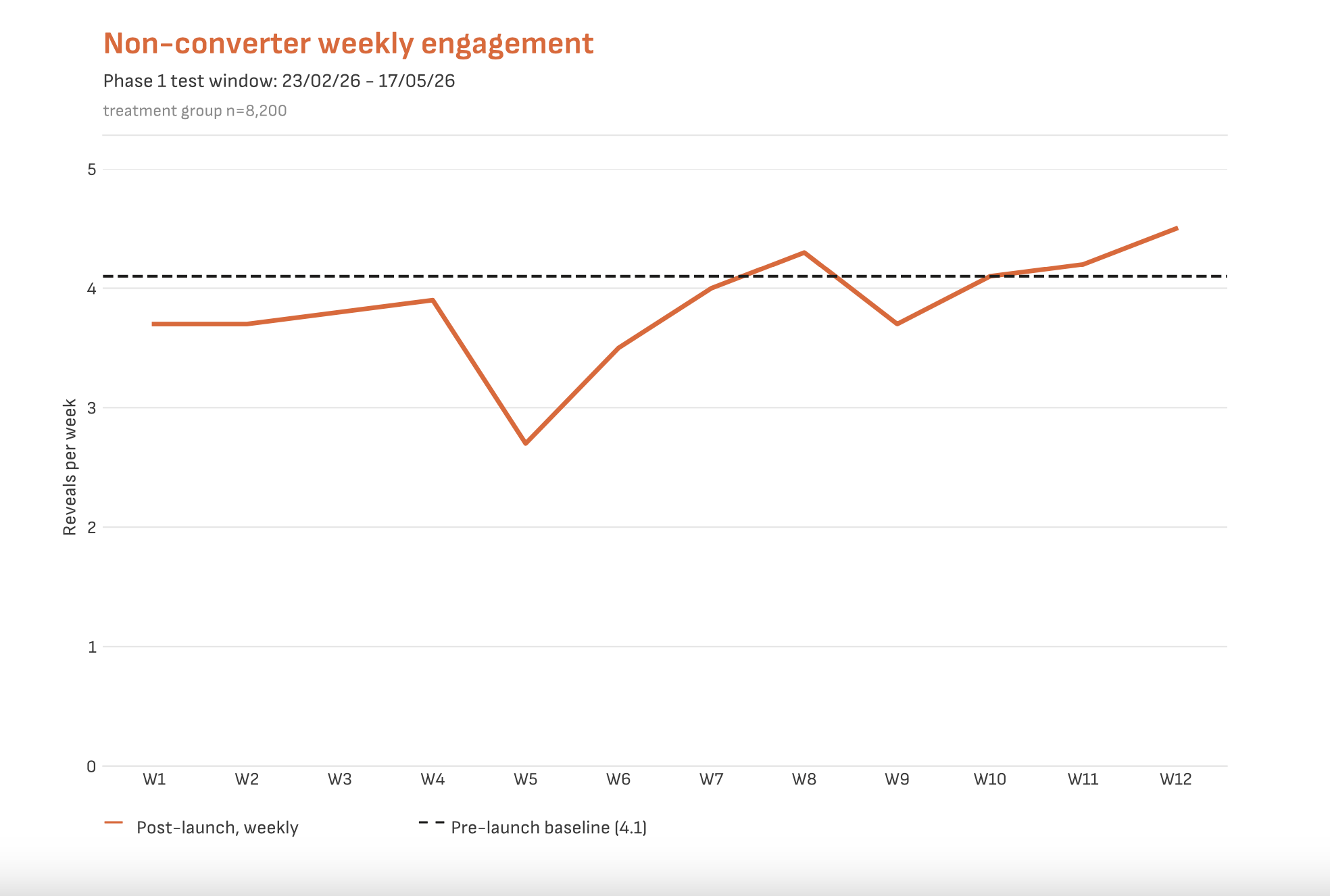
Non-converter engagement (guardrail)
Squads engagement rate (reveals per week) among Tier 5 users who saw the mechanic but didn't place a qualifying bet, tracked against pre-launch baseline.
Hypothesis: users who don't convert keep playing as usual — a drop would mean the mechanic feels too aggressive.
Result: weekly reveals ranged from 2.7 (during the international break) to 4.5 by the end of the window, against a 4.1 pre-launch baseline. The variation tracks the same fixture calendar as every other metric in this test — not the mechanic itself — which is what the guardrail is actually checking for: no mechanic-driven disengagement, distinct from the natural ebb and flow of a football-dependent product.
The decision
With the threshold cleared and both guardrails holding, we greenlit Phase 2 — expanding the mechanic to Tiers 1–4 with an adapted mechanism.
Next steps
Phase 2 of the roll-out plan consists of rolling out to all Tier 5. We will expand the experience to Tier 1-4, although the experience here is adapted to these cohorts to protect profitability (Users required to pay for transfer instead of grating it by a wager they already qualify for by default). This expansion of the experience creates some extra dependencies, hence why currently not implemented yet.
What I'd do differently next time
Reflecting on the validation of the solutions during the ideation phase, I realise I should have pushed to do a live experiment - as opposed to unmoderated desirability tests- to validate the potential solution. A fake door test targeting a Tier 5 pool would have given us much more certainty than the desirability tests, specially considering the quality of unmoderated are never as good given the unmoderated nature of it.
Tier 5 is also the right cohort to take that risk of a fake door test with: it's our highest-volume tier (on game), not our highest-value one, so testing something unbuilt in front of them carries less downside than it would with Tier 1
I'd also move the validation itself to a moderated format. Unmoderated testing is faster to run, but it trades away the ability to probe an ambiguous answer in the moment — exactly the kind of nuance that mattered when the result came back split 6/12 vs. 4/12 instead of a clear winner.